Features built for how doctors actually think
HIKMA isn't a question bank with a new coat of paint. Every feature is built around one idea: medicine is reasoning under uncertainty, and that's what we train.
Cases that change as you treat them
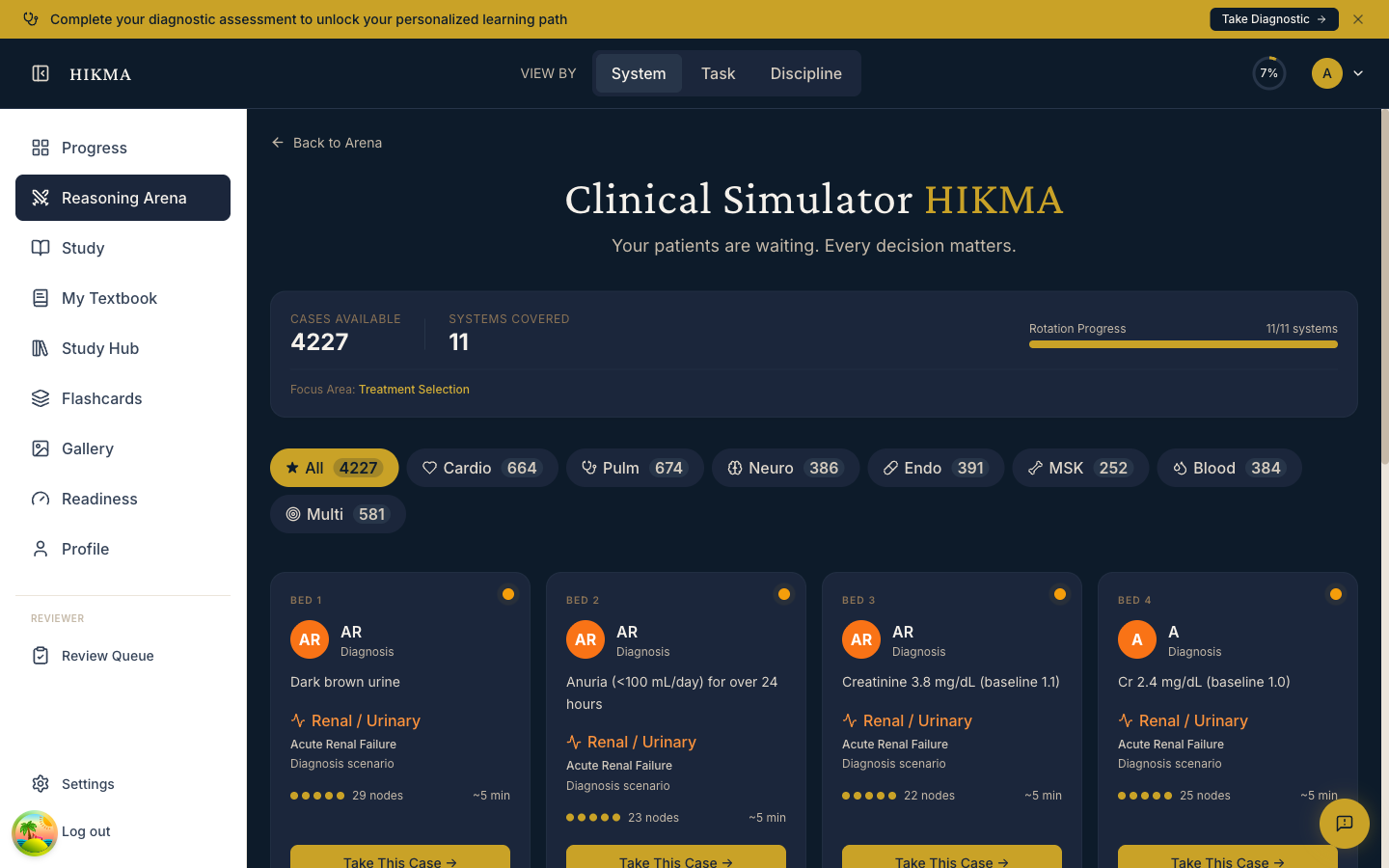
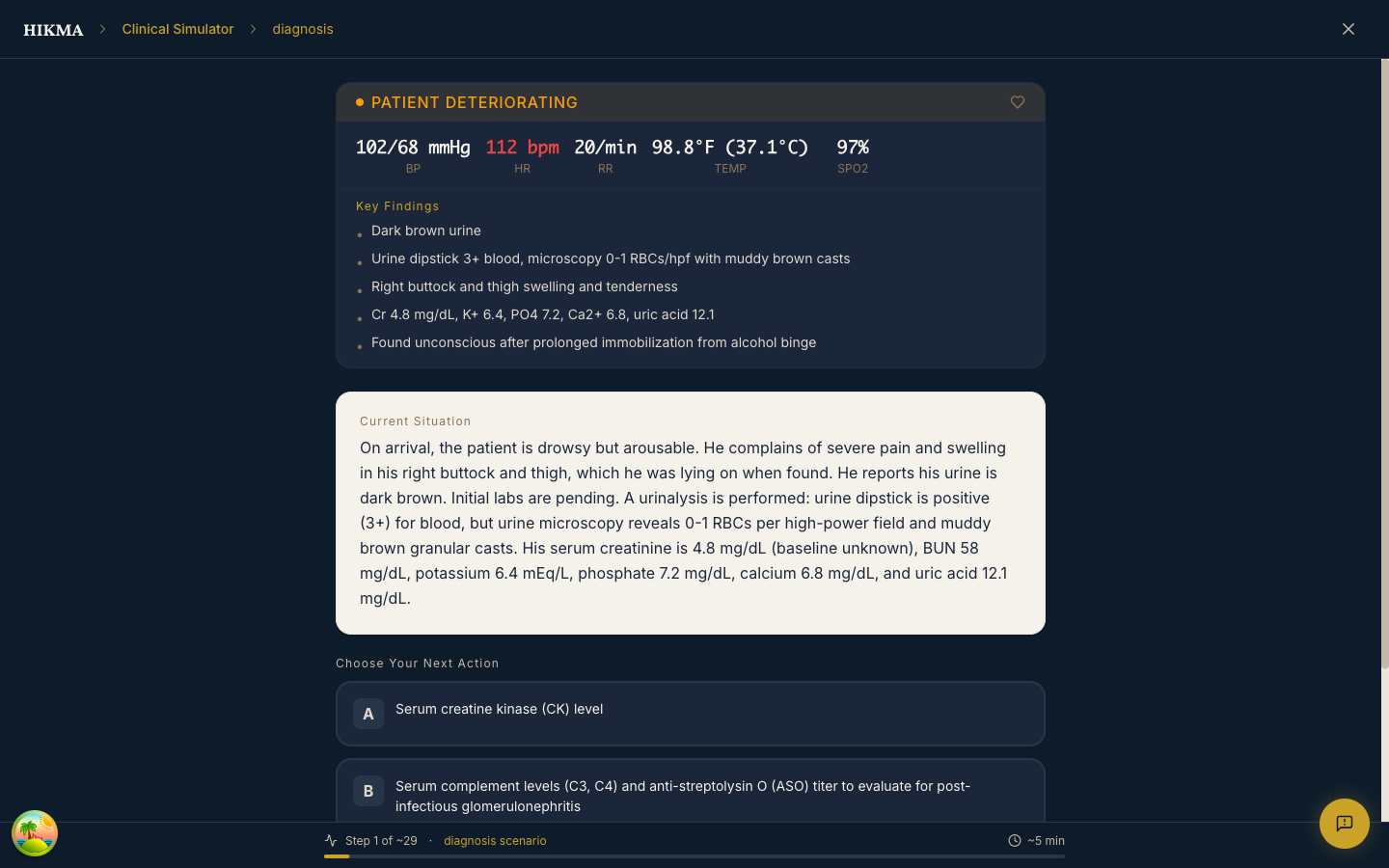
Static questions end with “the answer was B.” HIKMA cases branch. Order the wrong test, wait too long, miss the red flag — and watch the patient’s vitals respond on the monitor.
- 4,227 branching cases across all 11 organ systems
- Live vitals, key findings, and a deteriorating clinical picture
- Outcomes from full recovery to complication — learned safely
We trace where your reasoning diverged
Pick a path and HIKMA walks you back through your decision — the hypothesis you locked onto, the branch you skipped, and the cognitive trap that took you there.
- Decision timing flags anchoring and premature closure
- Step-by-step reasoning trace, not just a right/wrong stamp
- Feedback tied to the exact node where you went off-path
Practice the way you want to be tested
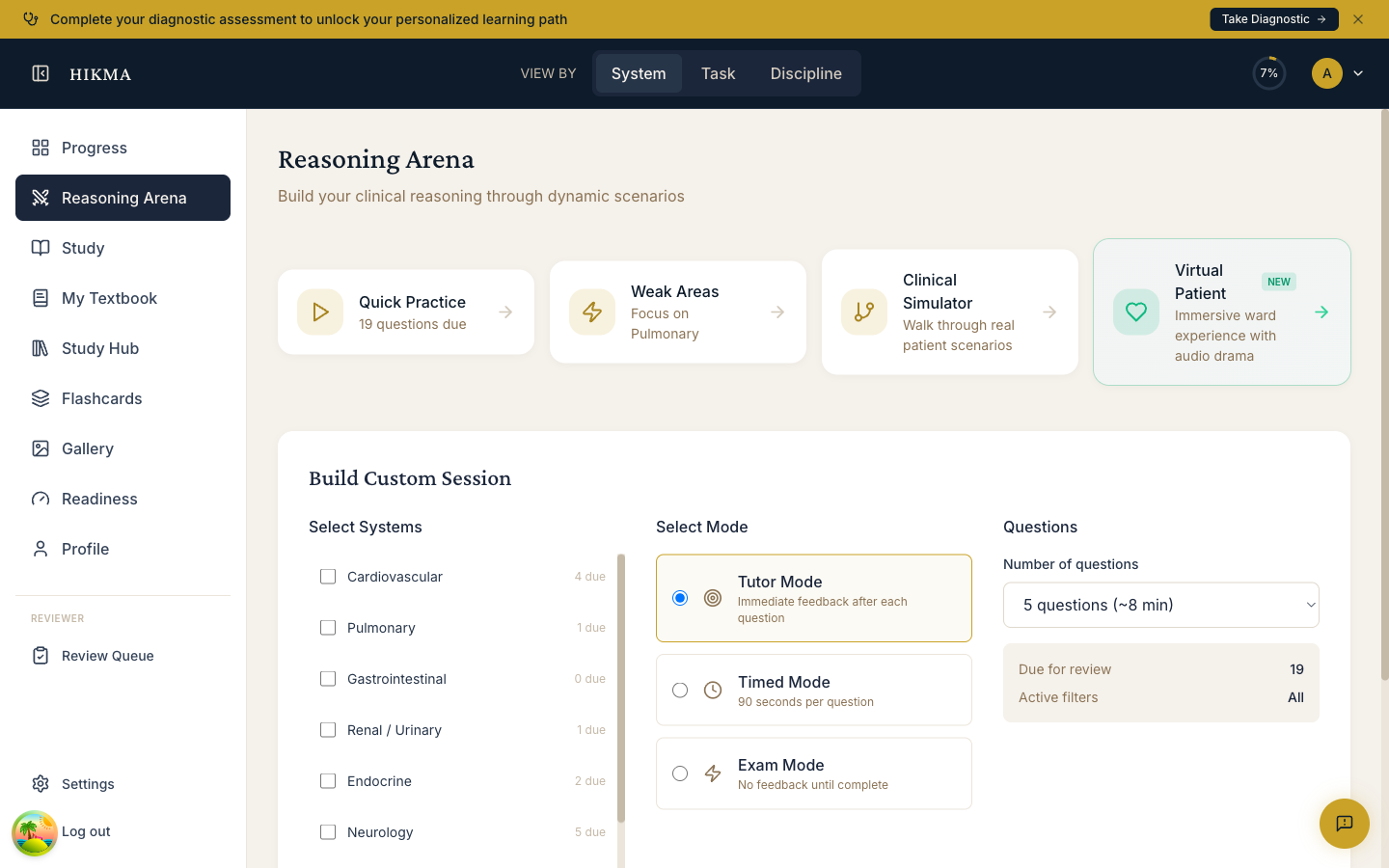
Build a session from any mix of systems, tasks, and disciplines, then choose how much pressure you want — from gentle tutoring to full exam conditions.
- Tutor, Timed (90s/question), and Exam modes
- Filter by 11 systems, 12 physician tasks, 18 disciplines
- Quick Practice, Weak Areas, and Virtual Patient shortcuts
Study by system, task, or discipline
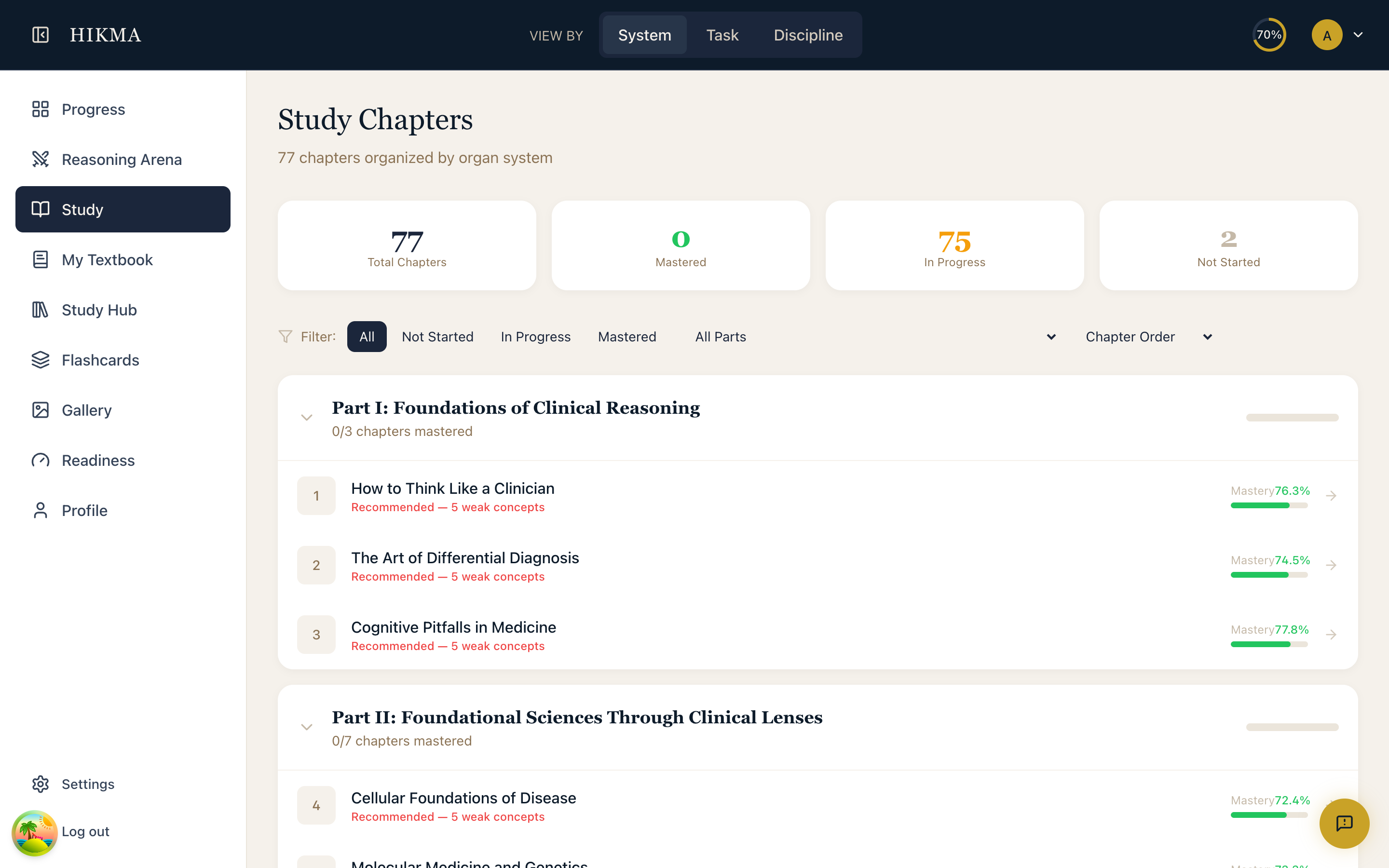
The same 77-chapter curriculum is navigable three ways, and your mastery follows you across all of them — so progress in one lens moves the needle in the others.
- System, Physician Task, and Discipline views
- Reasoning-first chapters like “Cognitive Pitfalls in Medicine”
- Per-chapter and per-concept mastery tracking
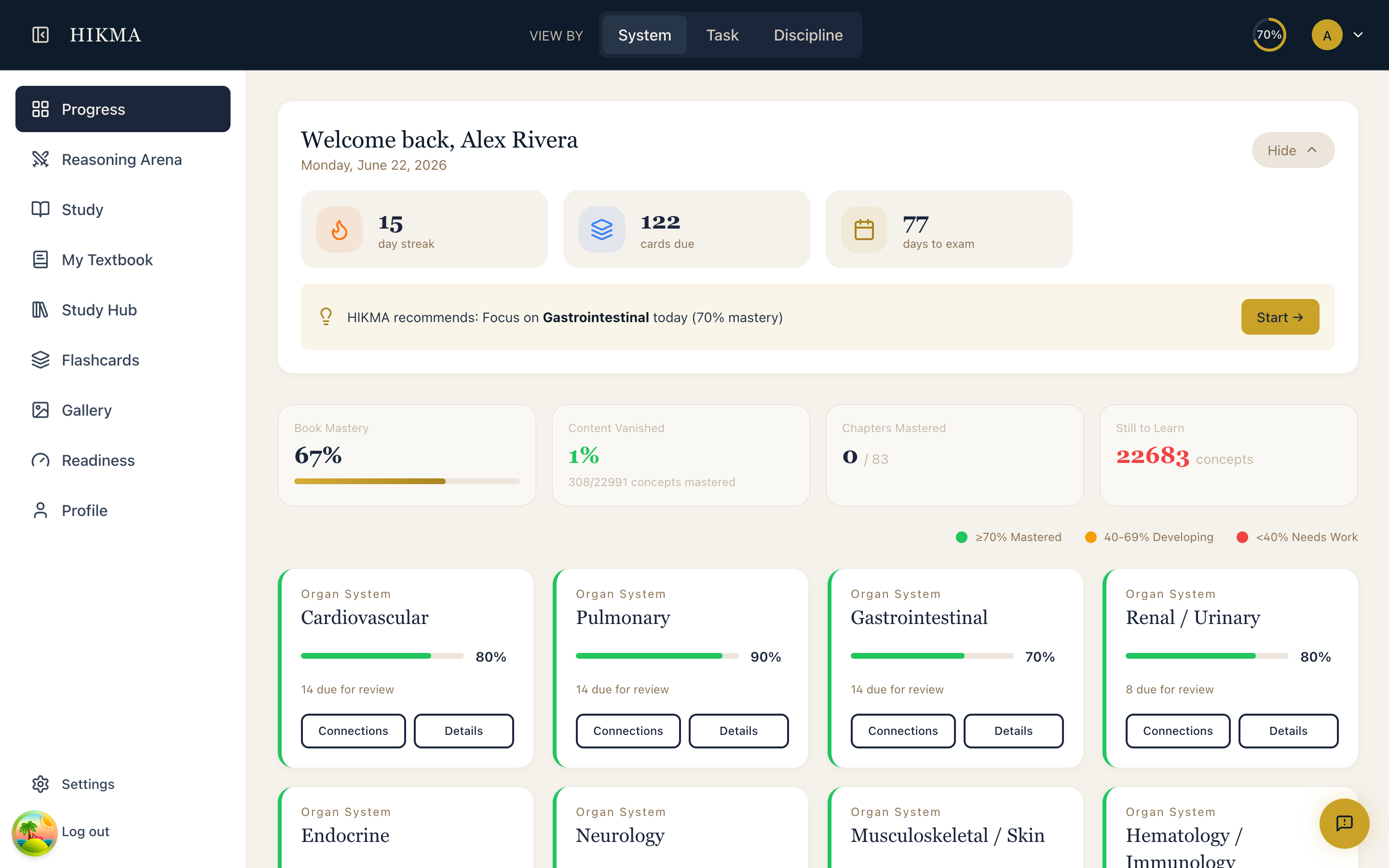
A textbook that shrinks as you master it
Out of 22,991 concepts you don’t re-grind the ones you’ve locked in. As mastery climbs, concepts fade from your queue, so you always spend time on the edge of what you don’t yet know.
- A live “content vanished” count of what you’ve cleared
- Spaced repetition resurfaces concepts before you forget
- System-by-system mastery heatmap on your dashboard
A study guide generated from your weak spots
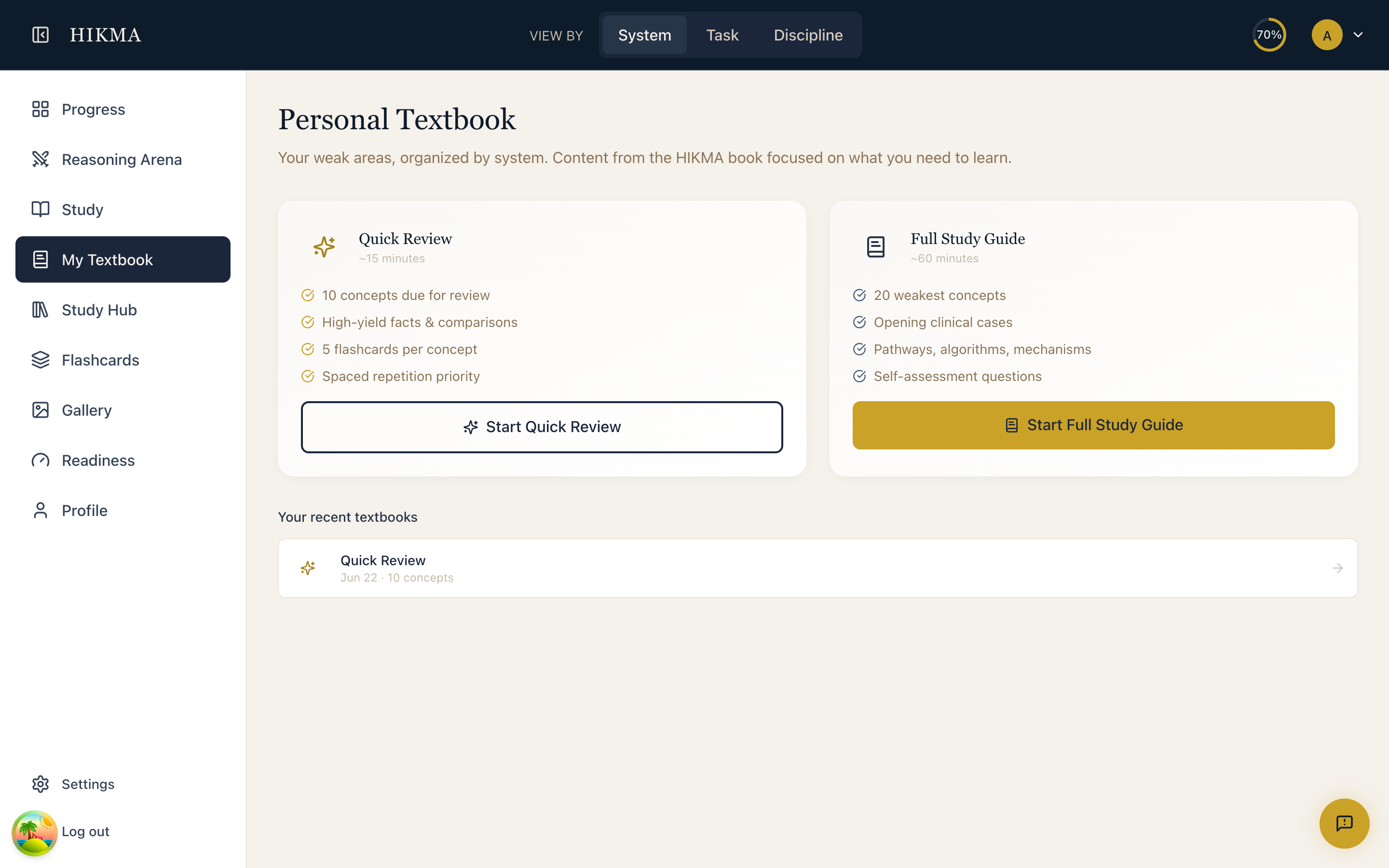
HIKMA assembles a guide from your weakest concepts — opening cases, mechanisms, flashcards, and self-checks — and updates it as your mastery shifts.
- Quick Review (~15 min) or full guide (~60 min)
- Live mastery deltas show what’s moved since you read it
- Spaced-repetition flashcards built in
Bring your own lectures and notes
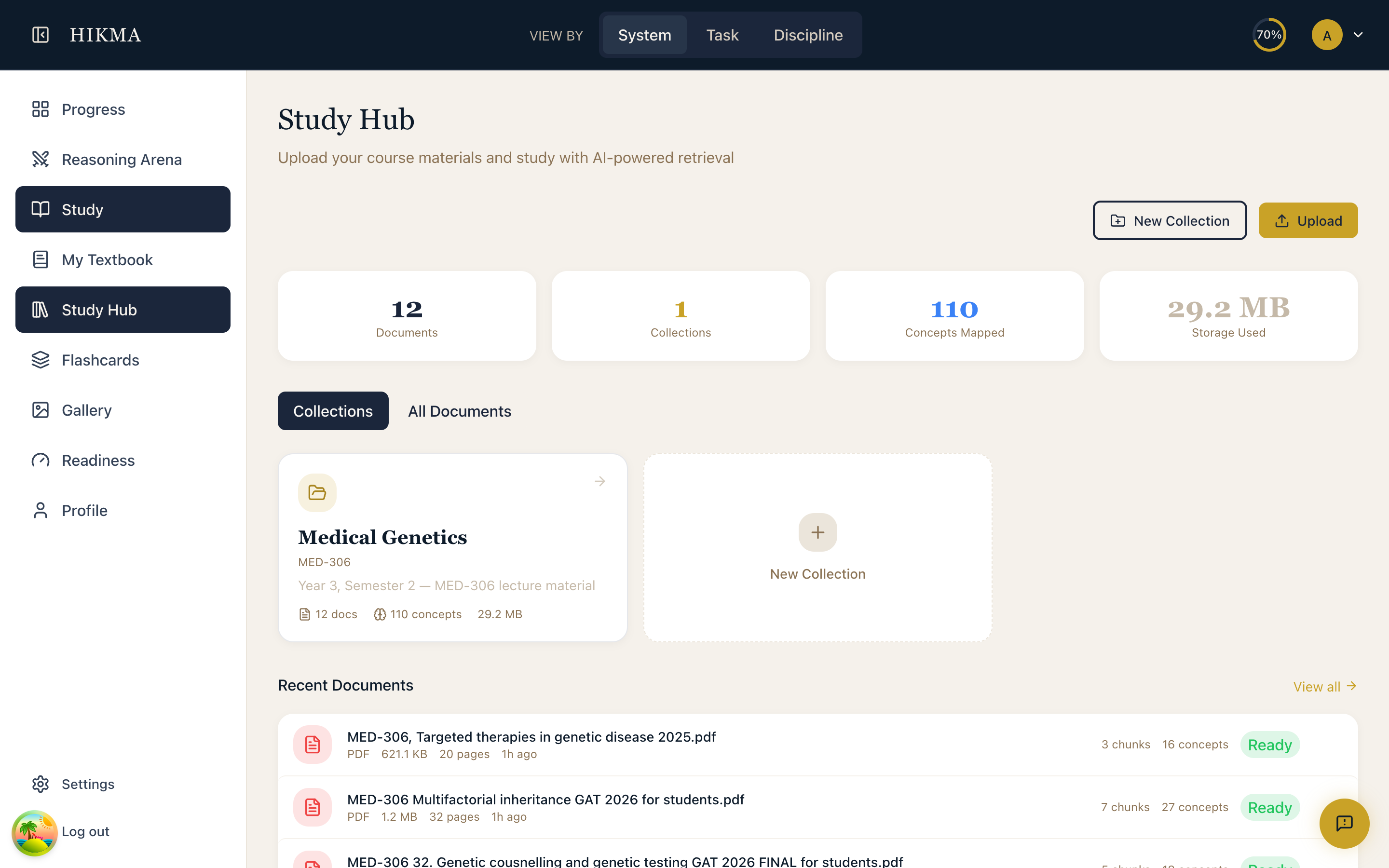
Upload your slides, syllabi, and notes, then ask questions and get answers synthesized from your material — cited back to your sources and mapped to the USMLE blueprint.
- PDF, DOCX, PPTX — parsed, embedded, and concept-mapped
- Chat with citations to your own documents
- Organize by course, block, or exam
Pass-readiness for Step 1, score potential for Step 2 CK
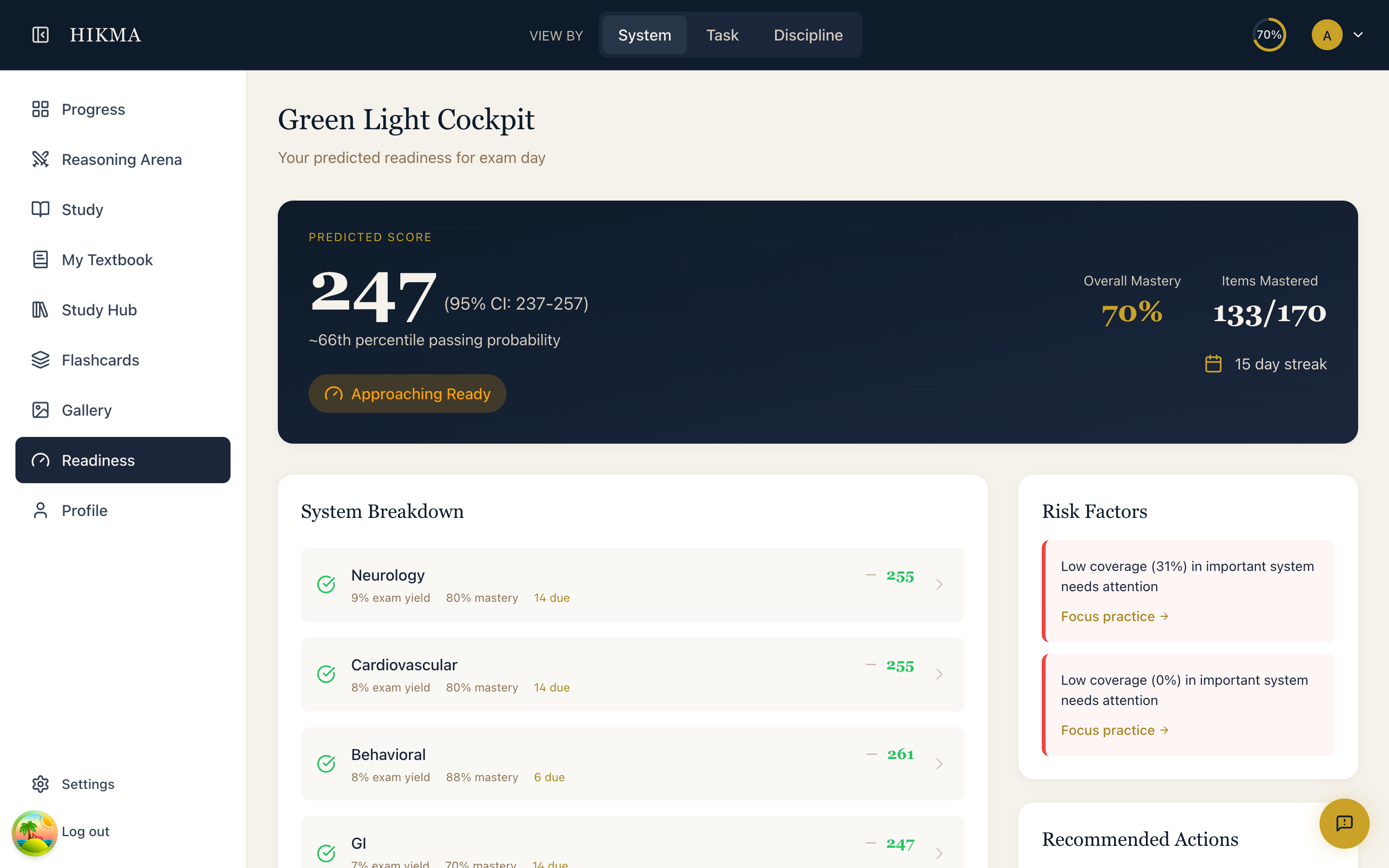
Step 1 is pass/fail and Step 2 CK is scored — so HIKMA does both. It maps your mastery and trend against each system’s exam weight to signal when you’re ready to pass Step 1, and to project your Step 2 CK score range.
- Step 1: a pass-readiness signal, system by system
- Step 2 CK: a projected score range from your trend
- Green / amber / red per organ system; improving, stable, or slipping
See it for yourself.
HIKMA is in private beta. Request early access and we'll bring you in as we open seats.